
The Great Consolidation
Why M&As Are on the Rise in the Accounting Industry
Mergers and acquisitions (M&A) in the accounting industry have seen a significant surge, particularly driven by private equity (PE) firms eager to invest in accounting practices. This trend is reshaping the industry landscape by providing capital for growth, technology upgrades, and talent acquisition, while addressing challenges such as the aging ownership demographics and partner exit plans.
Private Equity Investment in Accounting Firms
Private equity firms are actively investing in accounting firms to unlock high-growth revenue opportunities, especially in advisory and consulting services beyond traditional audit functions. PE capital enables accounting firms to modernize with technology investments and expand quickly through organic growth and strategic acquisitions. Also, PE firms bring professional management, operational expertise, and strategic guidance that traditional partnership models cannot offer, helping firms compete more effectively while raising service and operational standards in the industry.
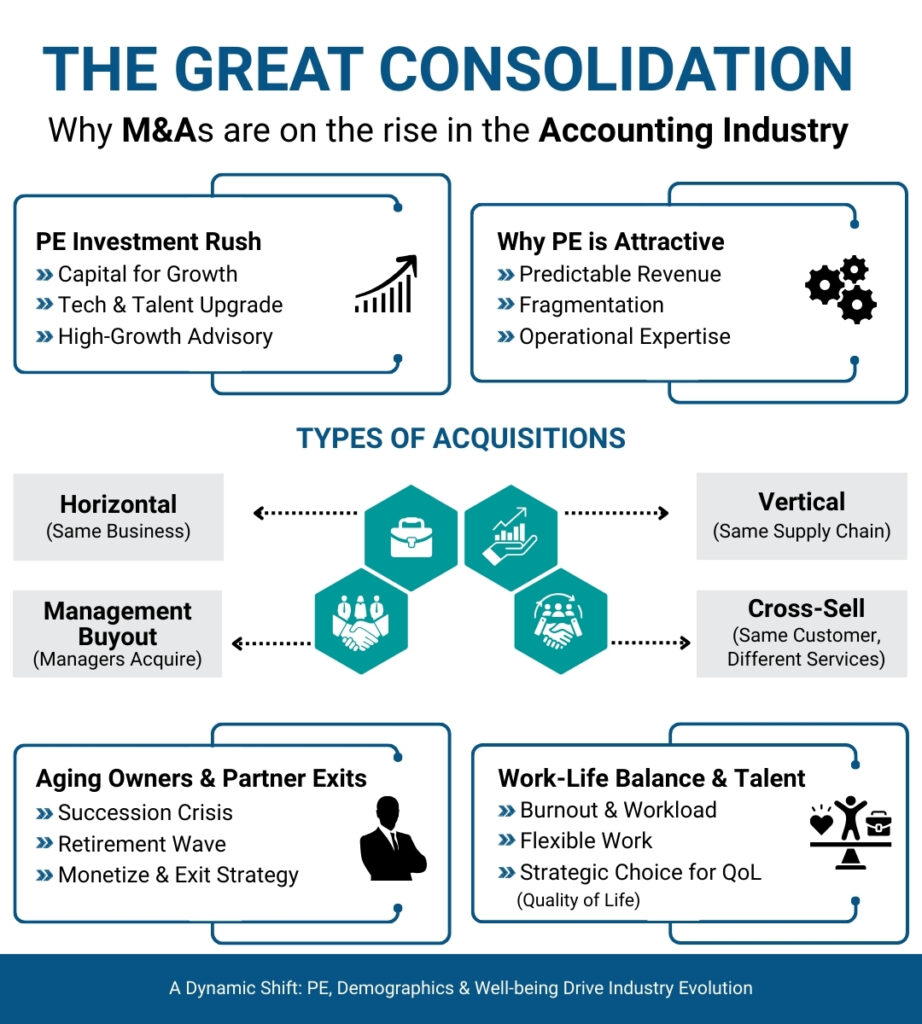
Types of Acquisitions in Accounting
M&A in accounting can take multiple forms:
- Asset purchases, where specific assets of a firm are acquired
- Share purchases, either by buying common shares or exchanging shares
- Mergers and amalgamations that fully combine two firms
- Management buyouts where existing managers acquire ownership
These transactions can vary from horizontal mergers with similar firms to vertical or market extension mergers across related services or markets.
Aging Owners and Partner Exits
The accounting industry faces a demographic challenge with a large portion of owners and partners from the Baby Boomer generation nearing retirement. Many have successfully built firms but now seek to exit for various reasons, including the desire for better work-life balance or shifting personal priorities. This exit wave is prompting ownership transitions either through sales, mergers, or bringing in private equity partners to ensure continuity and growth.
Work-Life Balance and Retention Challenges
Alongside ownership exits, accounting professionals are increasingly leaving firms due to burnout, heavy workloads, and lack of work-life balance. Surveys show nearly half of departing accountants cite these factors, highlighting the importance for firms to foster better workplace cultures and flexible work arrangements to retain talent. For some firm owners, stepping away is also a strategic choice to reduce stress and realign life priorities while ensuring their legacy through firm transitions.
These dynamics together make the current accounting M&A market vibrant and transformative, driven by private equity influx, the aging leadership cohort, and evolving workforce expectations. The trend points toward more consolidated, professionally managed, and technologically advanced accounting firms that can meet modern business needs while balancing owner and employee well-being.